A plain guide to licorice root with NIH sources: where it comes from, why it is a common flavoring, how it appears on supplement labels, who should ask a provider first and how Reviralis Complete lists it.

Editorial disclosure: reviralisguide.com is an independent guide and is not the manufacturer, distributor or seller of Reviralis Complete. It contains affiliate links, and we may earn a commission if you purchase through them, at no extra cost to you. These statements have not been evaluated by the Food and Drug Administration. Reviralis Complete is not intended to diagnose, treat, cure, or prevent any disease. Consult a healthcare professional before use.
Licorice root comes from Glycyrrhiza glabra, a plant whose sweet root is used as a flavoring in candy and other foods and has a long history of use going back to ancient Egyptian, Greek and Chinese traditions. On supplement labels it usually appears as licorice root extract, sometimes alongside its Latin name, as it does on the Reviralis Complete label.
NCCIH notes that licorice root is used as a flavoring in candy and other foods, and that many "licorice" products sold in the US contain anise oil instead of actual licorice.
NCCIH: Licorice rootLicorice root extract turns up in many herbal blends. A label that lists it inside a proprietary blend gives only the blend's total weight, not the licorice share.
NCCIH advises people who take any type of medicine to talk with a health care provider before using licorice or other herbal products.
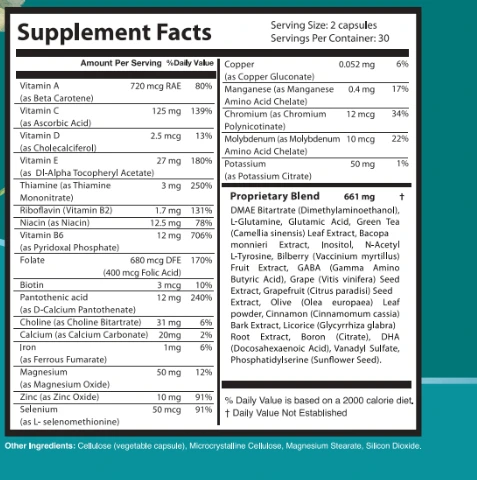
NCCIH: Licorice root safetyReviralis Complete lists licorice (Glycyrrhiza glabra) root extract as the 14th of 18 ingredients in its 661 mg proprietary blend, after cinnamon bark extract and before boron. The label gives no separate amount. Each two-capsule serving also lists 22 vitamins and minerals. We found no study of Reviralis Complete itself. The full panel is on the Reviralis ingredients page.
The root of Glycyrrhiza glabra, used as a flavoring in candy and other foods, with a long history of use in ancient Egyptian, Greek and Chinese traditions.
NCCIH advises people who take any type of medicine to talk with a health care provider before using licorice or other herbal products.
Not always. NCCIH notes that many "licorice" products sold in the US contain anise oil instead of actual licorice.
The label does not say. Licorice root extract is one of 18 ingredients in a 661 mg proprietary blend.
14th of 18, after cinnamon bark extract and before boron. Blend ingredients are listed by weight, largest first.
Reviralis Complete lists licorice root extract in its 661 mg blend, alongside 22 vitamins and minerals per two-capsule serving. The order page describes a 60-day money-back guarantee. Details are on the Reviralis ingredients page.
Open the Reviralis Order Page